
MDOC Inmate Population Scope
MDOC is the official abbreviation for the Michigan Department of Corrections. The agency uses MDOC in its public site branding, and its OTIS materials identify the department as MDOC. That matters because the MDOC inmate population is a specific statewide prison and supervision population. It is not the combined count of Michigan county jail inmates. County jails are run locally, usually by sheriffs. State prisons are run by MDOC.
OTIS contains information about prisoners, parolees, probationers, absconders, interstate compact supervision cases, and offenders discharged from MDOC supervision within the last three years. MDOC says OTIS does not contain county jail or city lockup inmates, people sentenced only to jail, people arrested and convicted but not yet sentenced, certain older photos, FOIA-exempt information, or people who have been off MDOC supervision for more than three years.
The MDOC OTIS explainer describes what the Michigan Department of Corrections inmate locator includes and excludes.
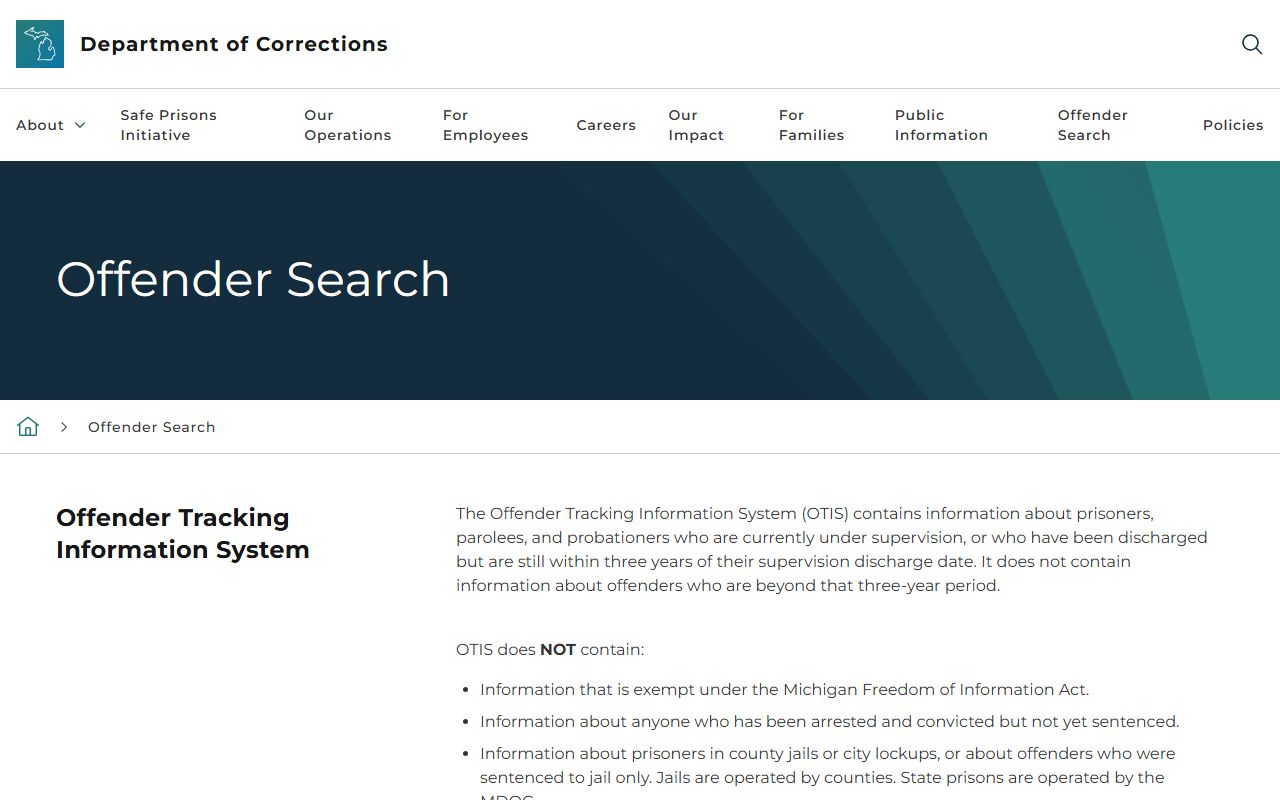
The explainer is the best starting point when a search might be confused with a county jail roster.
MDOC Inmate Population Numbers
The main audited MDOC inmate population number in the research is 32,778 prisoners at the end of calendar year 2024. MDOC's March 2025 Prison Population Projection Report says that the count decreased by 208 prisoners during 2024, a 0.6% decline. It also says the year-end 2024 population was 36.4% smaller than Michigan's March 2007 record high of 51,554 prisoners.
The same report said the prison system was 95.5% occupied at year-end 2024, with 1,552 available beds across 26 prison facilities. MDOC's transparency materials give a rounded current context of approximately 32,500 people incarcerated across MDOC facilities statewide. The dated report is the better source for precise population language, while the transparency page is useful for general current context.
| MDOC measure | Reported figure | Source context |
|---|---|---|
| Year-end prison population | 32,778 | March 2025 MDOC projection report |
| 2024 annual change | Down 208, or 0.6% | Calendar year 2024 |
| Change from peak | 36.4% below 51,554 | Compared with March 2007 record high |
| System occupancy | 95.5% | 26 prison facilities, year-end 2024 |
The MDOC transparency page provides current operating context for the statewide prison system.
Population figures should be read with their dates because prison counts change with court commitments, parole decisions, and releases.
MDOC Inmate Locator Fields
The MDOC inmate locator is OTIS at mdocweb.state.mi.us/OTIS2/Search. Visible search fields include Last Name, First Name, Offender Number, Sex, Race, Age, Offender Status, and Marks, Scars, and Tattoos. Offender Status can narrow the search to active offenders, prisoners, parolees, probationers, discharged offenders, parole absconders, or probation absconders. A known offender number is the most exact search. A name search should usually start broad, then narrow by status or age if results are too wide.
- Decide whether the person is likely in MDOC custody or local county jail custody.
- Open the OTIS explainer for scope, or go directly to the search form.
- Enter the offender number when known, or start with last name and first name.
- Use Offender Status only after a broad search returns too many results.
- Open a profile and confirm identifiers before relying on the match.
The OTIS search form shows the field set used for an MDOC inmate locator search.
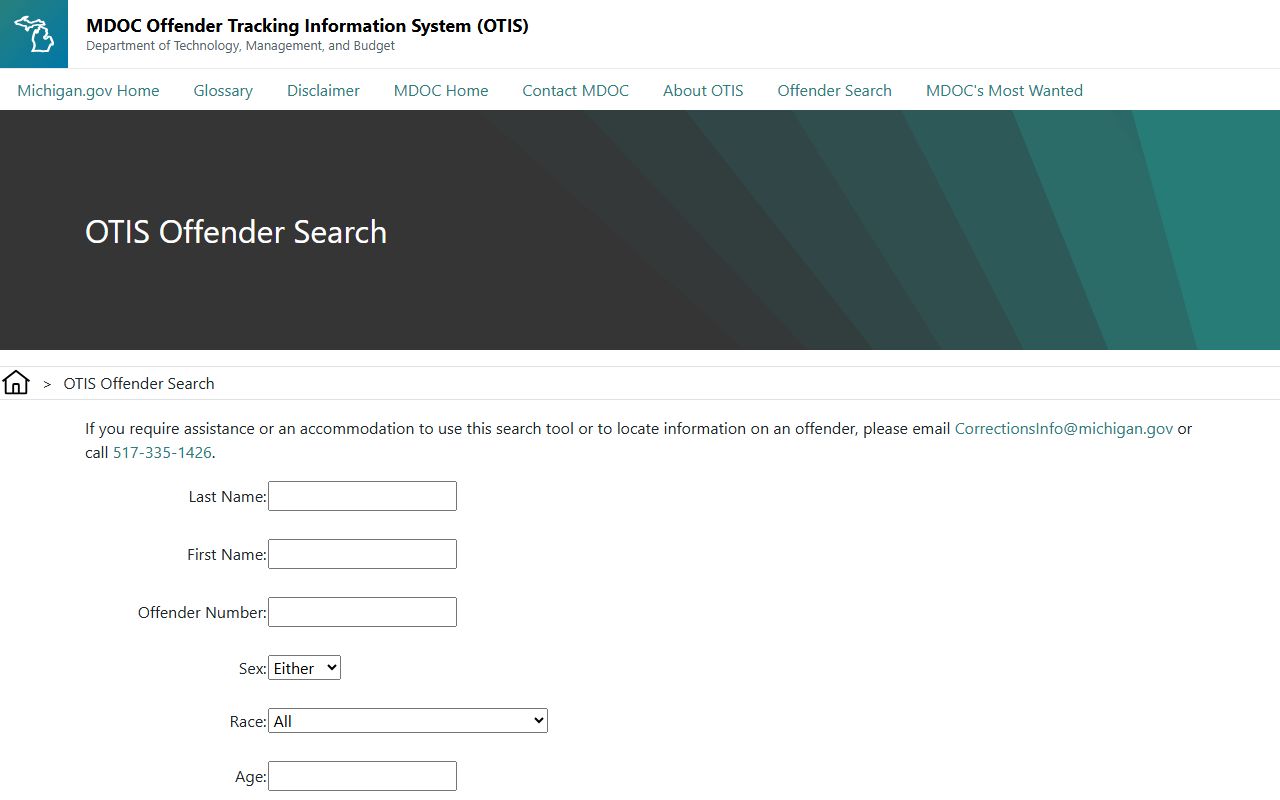
Those fields make OTIS stronger for known MDOC cases than for brand-new arrests that are still in county booking.
MDOC Inmate Record Meaning
OTIS records can show an MDOC number, name, photo when available, physical description, current status, location, sentence information, offense details, sentencing county, parole-board jurisdiction date, earliest release-related information, maximum date, and parole date when applicable. MDOC warns that no action should be taken solely on OTIS without confirmation from MDOC, courts, Michigan State Police ICHAT, or another official record source.
| OTIS field | Plain meaning |
|---|---|
| Location | The prison or supervision place, but absconder and escape records can show last known supervision context. |
| Prison | Usually a prison location, but may include special placement, writ, county jail, federal, or other status notes. |
| Parole | Community supervision after release from prison. It is not the same as discharge. |
| Discharged | MDOC jurisdiction has ended for that sentence, subject to OTIS retention limits. |
The OTIS About page defines key fields such as location, parole, probation, absconder, discharge, parole-board jurisdiction date, maximum date, and date paroled.
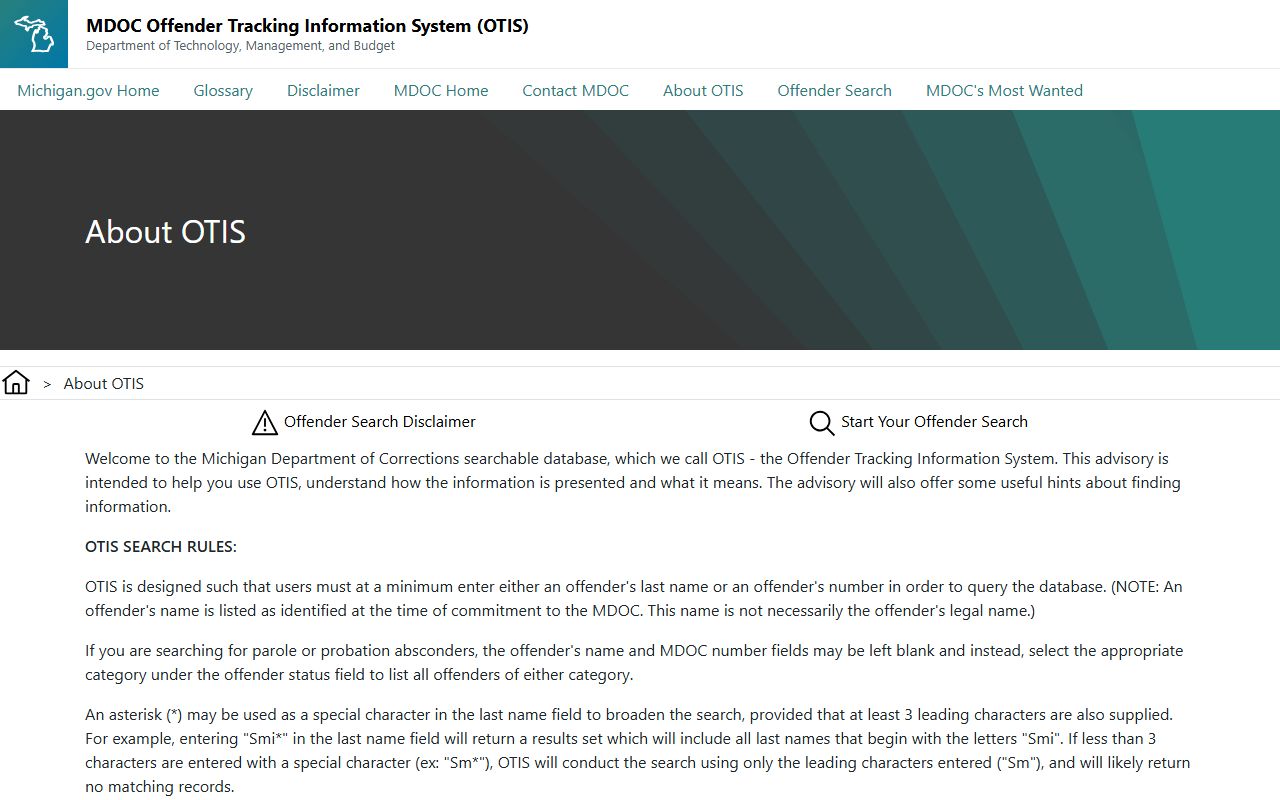
These definitions help prevent a search result from being mistaken for a guaranteed release date or exact current housing location.
MDOC Prison Facilities
MDOC's prison directory lists 26 open prisons. The list includes general-population prisons, reception and guidance functions, health-care and mental-health missions, women's prison functions, and special alternative incarceration. Michigan uses multiple security levels and special missions rather than one single prison category. Examples in the research include Alger with Level IV and II housing, Earnest C. Brooks with Level I, II, and IV housing, Charles E. Egeler Reception & Guidance Center as a male reception/guidance institution, Women's Huron Valley as the women's prison and reception site, and Woodland Center with a specialized mental-health mission.
The MDOC prisons directory lists open state prisons and is the source for the statewide prison count.
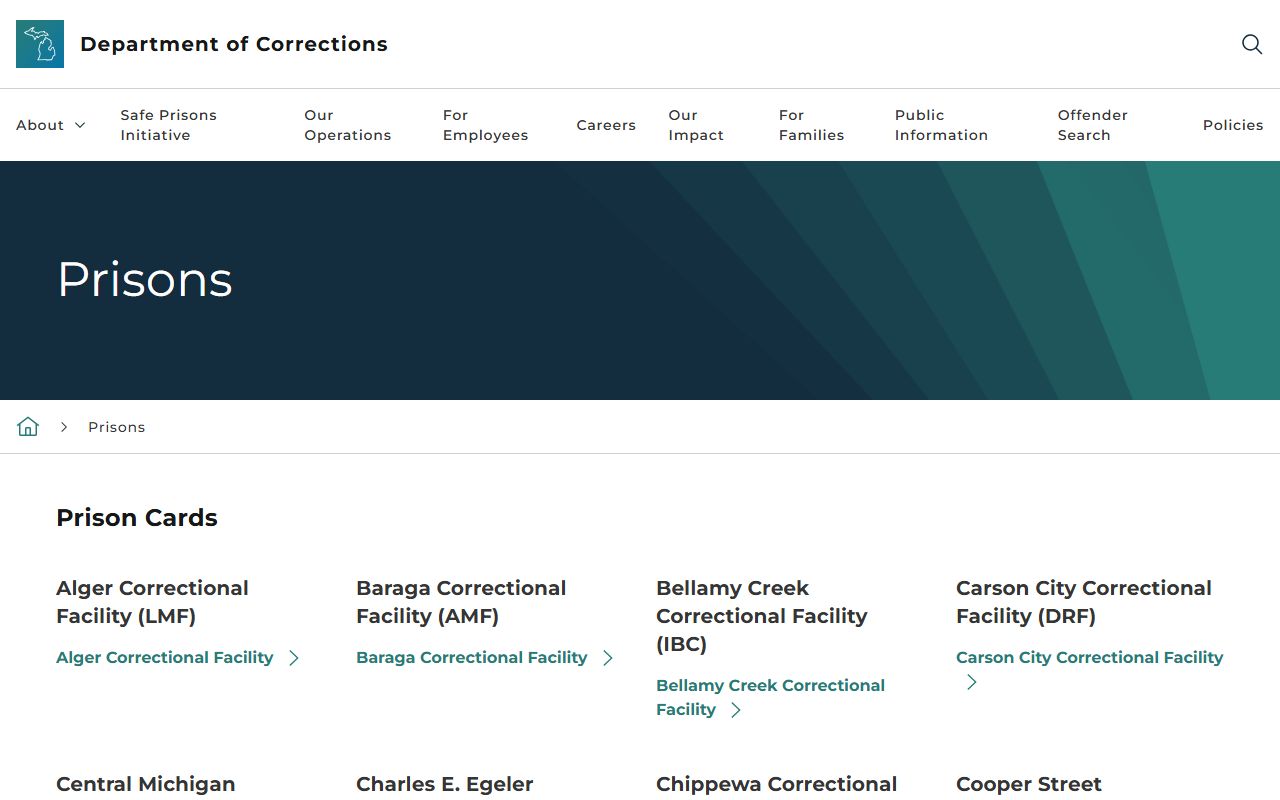
The facility directory on this site routes each prison through its county geography, but inmate lookup for a prison remains OTIS.
MDOC Parole and Release
Michigan prison release rules require careful wording. MDOC explains that for indeterminate sentences, the judge sets the minimum sentence and statute sets the maximum. The Michigan Parole Board gains jurisdiction when a prisoner has served the minimum term, adjusted only where older good-time or disciplinary-credit rules apply. Truth-in-sentencing means prisoners with specified assaultive offenses committed on or after December 15, 1998, and other crimes committed on or after December 15, 2000, are generally not eligible for good time or disciplinary credits.
Parole is discretionary. MCL 791.233 requires board assurance that release will not make the prisoner a menace to society or a public-safety risk. MCL 791.235 says parole is on the Parole Board's initiative and that there is no entitlement to parole. MDOC says a minimum of 28 days is required from a parole grant to physical release. A parole-board jurisdiction date is not a guaranteed release date.
The Michigan Parole Board page explains parole authority, good-time distinctions, lifer review, and clemency.
Release questions for state prisoners should be checked against OTIS, MDOC, the Parole Board, and the sentencing court when accuracy matters.
MDOC FOIA Requests
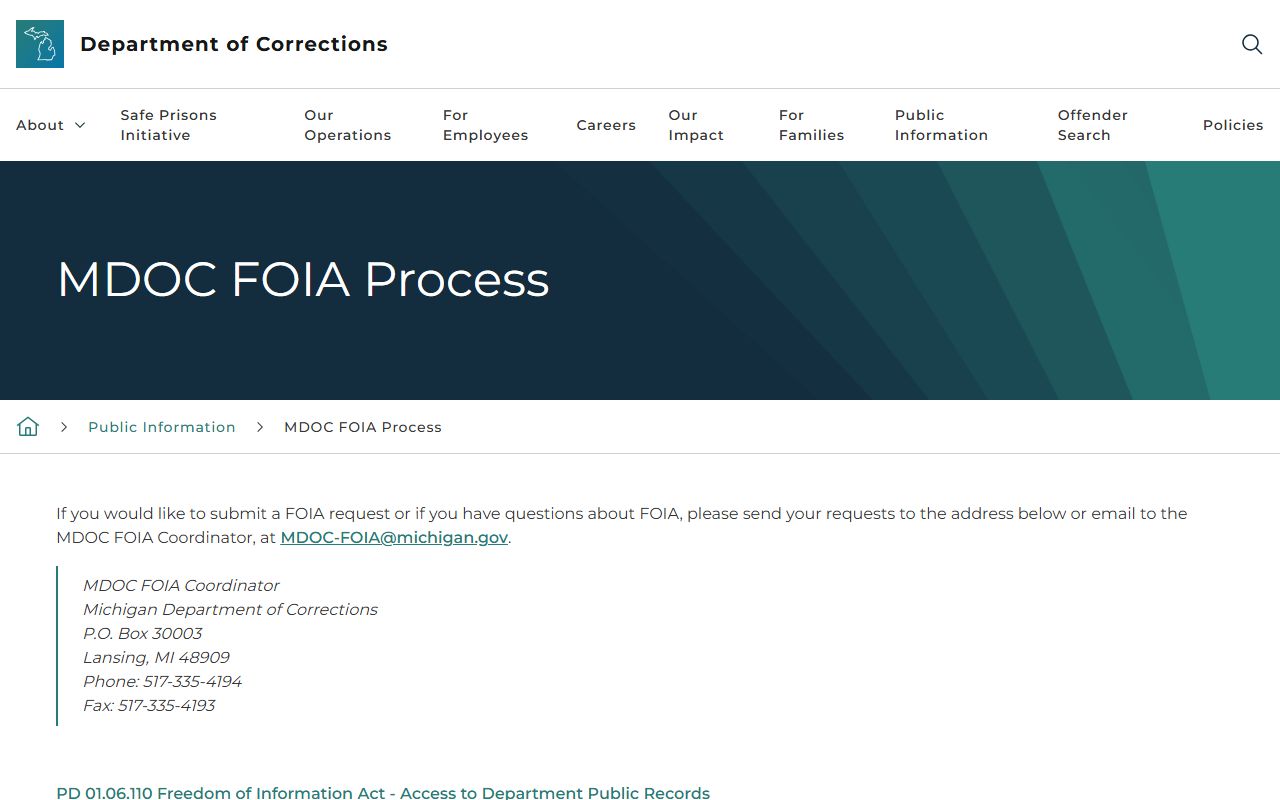
MDOC's public-records route is separate from county jail records. The MDOC FOIA Process page lists the MDOC FOIA Coordinator at MDOC-FOIA@michigan.gov, by mail at MDOC FOIA Coordinator, Michigan Department of Corrections, P.O. Box 30003, Lansing, MI 48909, by phone at 517-335-4194, and by fax at 517-335-4193. A transparency liaison is also listed for FOIA and Open Meetings Act navigation.
Use MDOC FOIA for state-prison and MDOC-held records. Use the county sheriff or county FOIA route for county jail booking records, local incident reports, county jail video, or local custody documents. Court records go to MiCOURT or the local court clerk. Juvenile, medical, victim, sealed, expunged, and security-sensitive records may be restricted or redacted.
Public Record Search
Sponsored Results